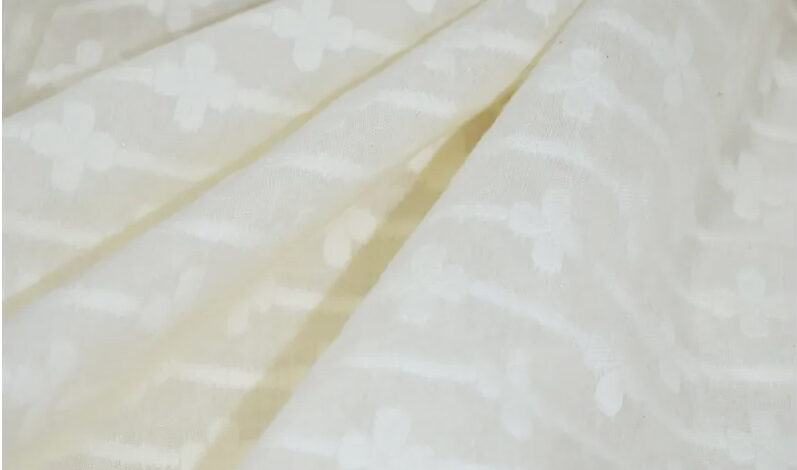
The textile industry of Bengal has enjoyed global recognition since ancient times, earning a reputation for its exceptional craftsmanship, fine materials, and unique weaving traditions. This long-standing fame did not emerge by chance—it is deeply rooted in the region’s favorable geographical conditions, such as its humid climate and fertile land, as well as the remarkable skill and dedication of its artisans. For generations, Bengali weavers have produced a wide variety of exquisite garments, each reflecting a rich cultural heritage and a deep connection to tradition.
These artisans, with their refined techniques and artistic sensibilities, have played a vital role in preserving and advancing the textile legacy of Bengal. Their creations are not merely fabrics but expressions of history, identity, and craftsmanship passed down through centuries.
Among the many renowned textiles of Bengal, muslin holds a particularly special place. Known for its extraordinary fineness, softness, and lightweight texture, muslin is often considered one of the most remarkable achievements in the history of textile production. It is essentially a distinguished variety within the broader category of fine cotton fabrics, celebrated worldwide for its delicate beauty and intricate weaving.
Although the traditional art of muslin weaving has declined over time, it still survives today as one of the oldest and most iconic textile traditions. Efforts to revive and preserve this heritage continue, ensuring that future generations can appreciate the elegance and historical significance of this extraordinary craft.
Since ancient times, the historic region of Sonargaon, located along the banks of the Shitalakshya River, has been renowned as a major center for the large-scale production of Jamdani textiles. This area flourished as a hub of skilled weaving, where generations of artisans perfected the intricate techniques required to produce these delicate and artistic fabrics. Even today, this legacy continues, with the largest concentration of Jamdani weaving communities now found in Rupganj, within the greater Sonargaon region.
Jamdani cloth is more than just a fabric—it is a living symbol of Bengali heritage, carrying with it a history that spans over a thousand years. It reflects the cultural richness, artistic excellence, and refined taste of the Bengali people. Throughout different periods, the colors, patterns, and design styles of Jamdani have evolved, adapting to changing trends and influences. However, despite these transformations, its core identity and elegance have remained intact.
What makes Jamdani truly remarkable is its timeless appeal. For generations, it has held a special place in the hearts of Bengali women, admired for its delicate craftsmanship, lightweight texture, and intricate motifs. Even in the modern era, Jamdani continues to symbolize grace, tradition, and nobility, maintaining its enduring charm across ages.
Dhaka muslin was once world-famous as one of the finest and most luxurious fabrics ever produced. Renowned for its extraordinary softness, transparency, and delicate weaving, it became a symbol of elegance across royal courts and global markets. However, during the period of British colonial rule in India, this remarkable textile industry declined drastically. Due to exploitative policies, economic pressure, and deliberate suppression of local craftsmanship, muslin production nearly disappeared.

Jamdani: The Pride of Bangladesh in Global Fashion Industry
Despite this decline, the legacy of muslin did not vanish entirely. Through the resilience, dedication, and long struggle of Bengali artisans, elements of this ancient tradition have survived, evolving into other forms such as Jamdani weaving. Jamdani, in particular, stands today as one of the oldest continuing textile traditions, preserving the essence of muslin craftsmanship through its intricate patterns and handwoven techniques. In recognition of its cultural and artistic significance, Jamdani has been inscribed by UNESCO as an intangible cultural heritage of humanity, celebrated worldwide as an extraordinary form of artistic expression.
The word “Jamdani” itself has its roots in the Persian language. It is commonly understood that “jam” refers to a type of fine cup or goblet, while “dani” means a container or holder. Together, the term evokes the image of something precious and refined. The Persian origin of the name also suggests historical trade connections, indicating that Jamdani textiles were once widely exported to regions like Persia, where they were highly valued.
In earlier times, the production of muslin and Jamdani was limited to a few scattered regions of present-day Bangladesh, with Sonargaon being one of the most prominent centers. However, by the end of the Mughal period, the industry had already begun to decline significantly due to political and economic changes. Over time, it came close to extinction.
Yet, even after facing centuries of challenges and setbacks, Jamdani weaving continues to survive today—standing as a powerful testament to the endurance, creativity, and cultural pride of the Bengali people.
During the Pakistan period, despite severe challenges and the gradual decline of traditional weaving, several dedicated artisans in different villages—particularly in Siddhirganj, Tarabo, Ruposhi, and Kazipara—continued to preserve their ancestral profession. Even in the face of economic hardship and diminishing demand, these craftsmen held firmly to their hereditary occupation, passing down their skills from one generation to the next and striving to keep the tradition alive.
Following the independence of Bangladesh, the situation began to improve gradually. With increased government attention and financial support directed toward traditional cottage industries, efforts were made to revive and sustain the country’s rich textile heritage. As a result, a renewed interest emerged in weaving Jamdani—the only surviving variety closely linked to the legendary muslin tradition. This revival introduced new momentum and adaptations in design, production, and market reach.
Consequently, motivated by the economic opportunities associated with yarn and dye import licenses, permits, and quotas, influential traders and business groups became involved in the industry. In order to secure these benefits, they sought out the remaining skilled artisans, bringing them back into organized production. Looms were re-established in various scattered locations, leading to a partial revival of Jamdani weaving.
While this process helped restore the industry to some extent, it also reflected a shift in control—from purely artisan-driven craftsmanship to a more commercially influenced system—marking a new phase in the long and evolving history of Bengal’s textile tradition.
Over time, a significant shift occurred within the Jamdani industry. The traders who had initially gained advantages through licenses and permits gradually transferred control of the business back into the hands of the actual artisans. This transition proved beneficial for the craftsmen, as it allowed them to move beyond the limitations they had long faced. In the past, most artisans worked under middlemen or original owners and were confined to modest daily or weekly wages, with little control over production or profit.
With this change, the artisans themselves became more independent and entrepreneurial. They began purchasing yarn and dyes directly from the market, managing their own weaving processes, and taking responsibility for selling their products. This newfound autonomy enabled them to establish a stronger presence in the local market and actively create demand for Jamdani textiles across Bangladesh.
Today, Jamdani production is concentrated on both sides of the Shitalakshya River, particularly in areas located about twenty miles east of Dhaka. This region has once again become a vibrant center of traditional weaving, where artisans continue to uphold centuries-old techniques while adapting to modern market needs. The industry now stands as a symbol of resilience and empowerment, reflecting how skilled craftsmen have reclaimed their role and revitalized a historic cultural heritage.
At present, no weavers produce Jamdani using traditional handmade yarn as in the past. Instead, yarn is now sourced from both local and imported mills, reflecting the modernization of the industry. Silk yarn is commonly imported from countries such as India, China, and Japan, while cotton—essential for producing fine-quality yarn—is also largely imported to meet growing demand.
In recent years, the global demand for Jamdani has been steadily increasing. As a result, artisans and designers have expanded its applications beyond traditional garments. Jamdani is now being used in a wide range of products, showcasing its versatility and timeless aesthetic. In recognition of its cultural importance, UNESCO has inscribed Jamdani of Bangladesh as part of the world’s intangible cultural heritage. UNESCO has also collaborated with local artisans to promote its diverse uses and global appreciation.
Through various international exhibitions and initiatives, Jamdani has been presented in innovative forms such as curtains, scarves, cushion covers, chair covers, wallets, and more. These efforts have helped introduce the fabric to a wider global audience, highlighting not only its traditional value but also its adaptability in contemporary design.
Today, Jamdani is admired not only as an exquisite garment but also as a source of artistic inspiration. Its intricate geometric patterns have influenced other creative fields, including alpana (traditional decorative art), textile printing, furniture design, and even fashion accessories like leather bags and shoes. The widespread use of these motifs reflects a refined aesthetic sensibility, making Jamdani a symbol of sophisticated taste and cultural identity.
Discussions with artisans, trainees, and even moneylenders associated with the Jamdani industry reveal a shared sense of cautious optimism about its future. They believe that, barring any major disruptions or crises, the industry has the strength and resilience to sustain itself.
In fact, many of them express confidence that as long as they can access essential raw materials—particularly quality yarn and dyes—they will be able to continue their craft independently, even without significant financial or institutional support from government or non-government organizations. This confidence stems from their experience in recent years, where their efforts have played a key role in revitalizing the industry.
Artisans have successfully created a strong domestic market for Jamdani across Bangladesh, increasing its popularity among local consumers. At the same time, international demand has also grown steadily. Every year, various countries receive a considerable number of Jamdani sarees and related products, further strengthening the industry’s economic base.
This combination of local demand and global recognition has given new hope to those involved in the trade, reinforcing their belief that Jamdani can continue to thrive as both a cultural heritage and a sustainable livelihood for generations to come.

Leave a Comment
Pingback: Different Types of Sari in Bangladeshi Fashion on 10/04/2026
4 COMMENTS
Omar3292
4 months agohttps://shorturl.fm/kbANN
Evelyn277
3 months agohttps://shorturl.fm/OZR6Y
Karina2556
3 months agohttps://shorturl.fm/X72Mm